
Navigating the modern workforce is not just a journey, but a strategic dance with emerging trends. Continuous development and a focus on skills aligned with job roles become not just metrics but sparks igniting job satisfaction and retention.
Studies highlight the importance of ongoing development, not just for individuals but also for companies. Without it, transformation becomes impossible. People need to be guided, trained, and, above all, motivated. So, what should be the priorities for companies?
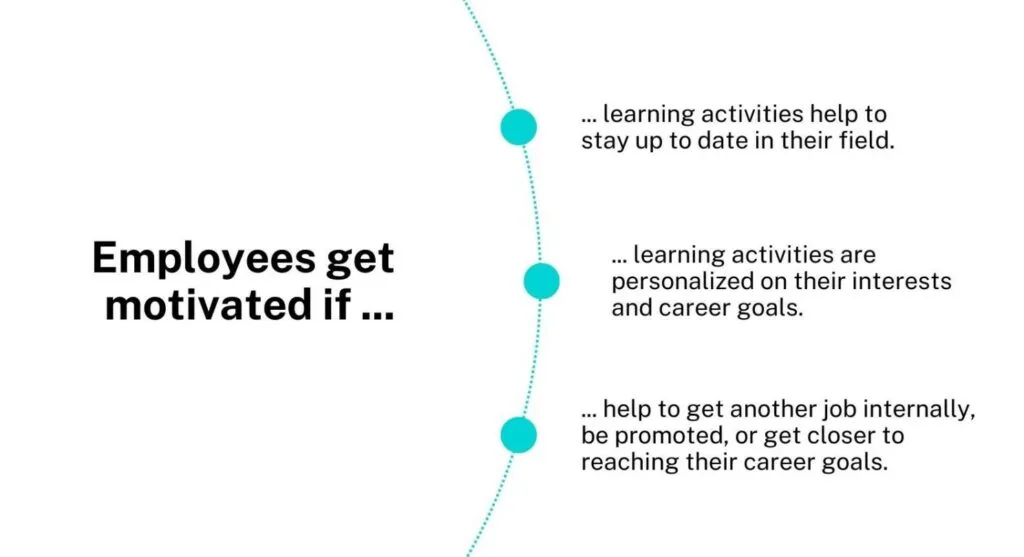
Five Employee Priorities for Sustainable Companies
#1 Opportunities for Learning and Development
Integrate personalized learning pathways, ensuring employees have continuous opportunities for skill enhancement and professional growth.
#2 Sense of Belonging
Foster a supportive work environment that promotes a sense of belonging, encourages collaboration, and creates a community where employees feel valued.
#3 Alignment with Company Values
Incorporate organizational values into learning programs, reinforcing a sense of purpose and alignment with the company's overarching mission.
#4 Focus on Quality of Life
Recognize the importance of work-life balance and well-being in corporate learning initiatives, allowing employees to prioritize both professional and personal development.
#5 Promotion of Collaboration
Develop learning experiences that encourage collaboration and teamwork, recognizing the significance of collective intelligence in achieving organizational goals.
The Paradigm Shift in HR Priorities
The post-pandemic era isn't just a chapter; it's a spotlight on the critical importance of internal agility. Companies transitioning to competency-based planning seize a unique chance to foster a learning culture, align with trends like interdisciplinary learning, enhance recruitment, and ride the wave of the megatrend — promoting internal mobility.
Why a Pivotal Moment in Organizational Evolution Is Needed
Skill alignment and job satisfaction: Globally, employees who find that their skills are underutilized are 10 times more likely to seek new opportunities.
Unstoppable shift in priorities: "Opportunities for training and development" has risen from ninth to first place in the factors most important to employees worldwide in just two years.
Supporting instead of replacing: Almost 65% of HR developers in Europe agree that retraining employees is more cost-effective than hiring new employees.
The popularity of learning initiatives brings challenges. To overcome this, companies must align learning with business skills, focusing on identifying gaps rather than mere completion rates.
Proactive measures addressing skill misalignment, investing in reskilling, and embracing internal mobility — it's not just a chance, it's a necessity for sustained success.
Source: LinkedIn Learning, Workplace Learning Report 2023