
With our new feature, complete channels can be automatically translated into nearly 30 target languages. Since individual countries often have special requirements, the content can still be manually post-processed or even converted into standalone channels.
Easy Internationalization Through Automatic Translation
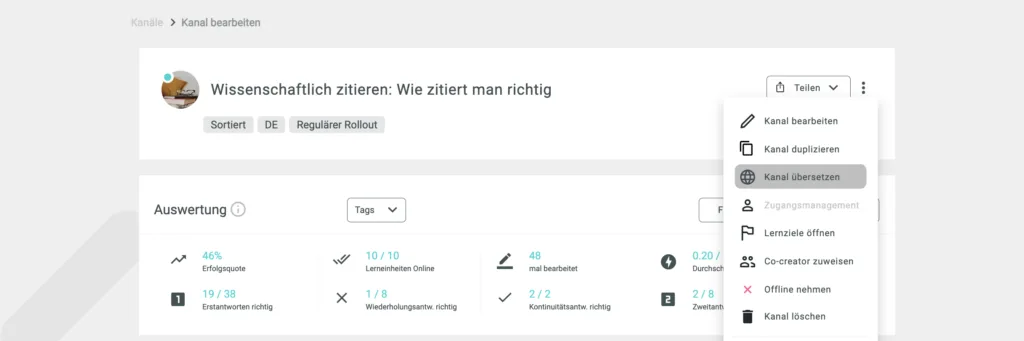
Our customers employ people from and in a wide range of countries. Therefore, it is important that learning content in chunkx can be provided quickly and without much effort in the appropriate languages. To simplify this process, customers can now have entire channels automatically translated in chunkx creator via the DeepL interface.
This Is How Simple Translations Work in chunkx
Each channel can be translated into currently about 30 languages. A translation takes about 10–30 seconds, depending on the volume of content.
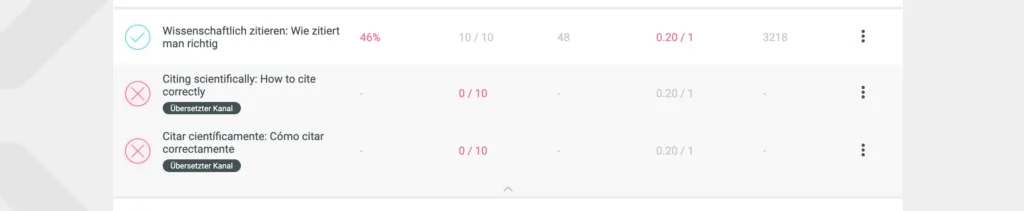
The channel then appears as a translation below the main channel and can be reviewed, further edited and put online.
Internationalization and Regionalization
Customers have different requirements for translations, which can vary depending on the subject and target group. Often a 1:1 translation is sufficient — this is called internationalization. However, sometimes the learning content needs to be adapted to regional requirements. In this case, we speak of regionalization.
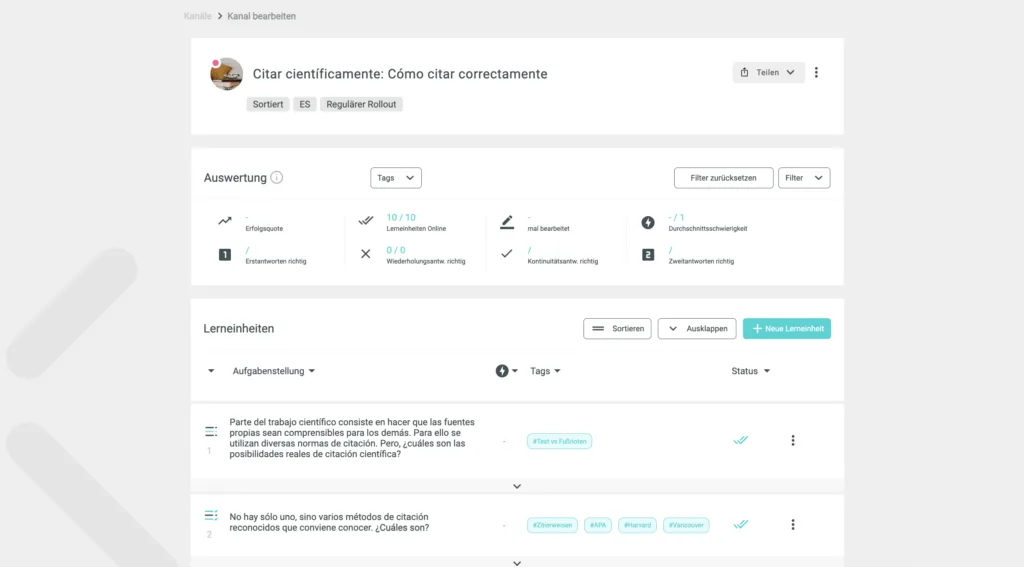
In chunkx, both are easily possible. A translated channel can be further edited so that central terms, product names or, if necessary, entire paragraphs can be changed according to regional requirements. It is also possible to add or delete content. Authors retain control over whether the channel should still be a "translation" after the changes or whether it has moved so far from the original that it should be converted to a regular channel.
Optimized Selection for Learners
In chunkx, learners can not only set their main language, but specify other languages they speak. According to this information, channels are selected in our microlearning app optimized for learners. And if it is not the right language, the selection can be easily changed.
Why DeepL?
We looked at different ways to translate content — from Google Translate to DeepL to translations with OpenAI GPT models. DeepL convinced us on one hand regarding quality and on the other hand as a German company regarding data protection.
We also found translations with language models like GPT-4 very exciting, as contexts can be better taken into account — but the quality was not yet reliable enough. However, we will keep a very close eye on developments here.
When Do You Start with chunkx?
With chunkx, we've created the solution to turn your one-time learning activities into continuous learning experiences. We address language barriers and regional requirements with our automated translation and the ability to customize individual translations.
Talk to us about your company's learning culture, your challenges, and how we can help you with chunkx.